
The research
What the research says, and what a church can do about it.
The number of family members available to care for each older adult is shrinking. In 2010 there were seven adults aged 45 to 64 for every American over 80. By 2030 there will be four, and by 2050, three (U.S. Census Bureau, reported in Harvard Business Review, 2025).
The research below shows who is carrying that load today, what caregivers say they need, and where a congregation can step in.
Caregivers’ needs
Who caregivers are, and what they want.
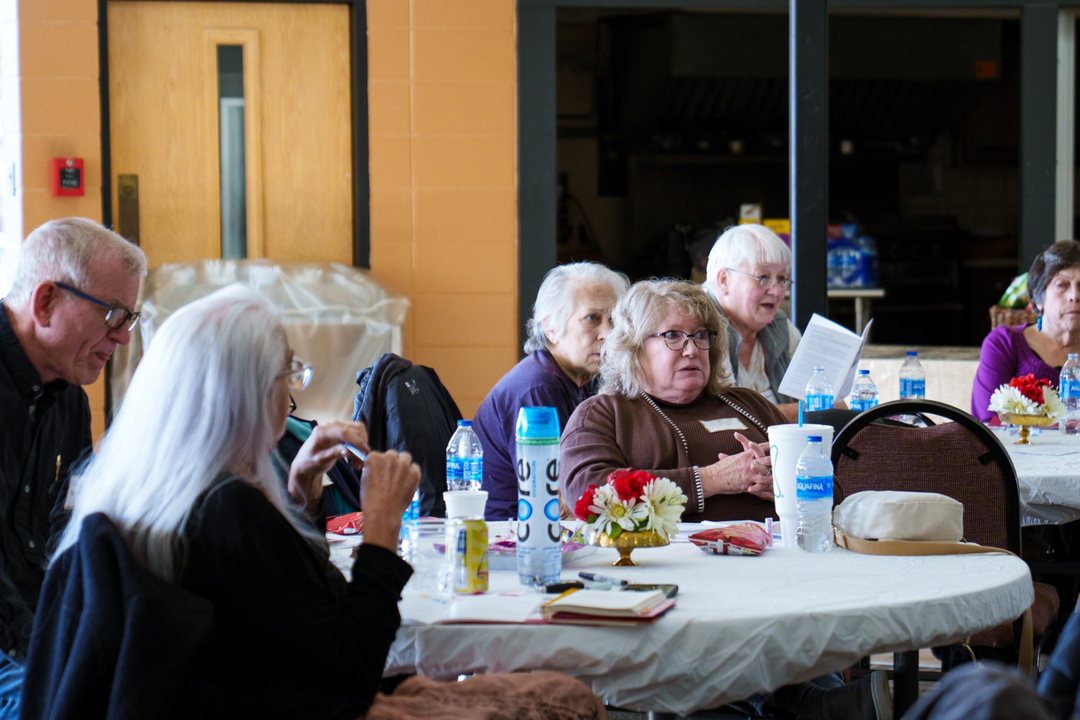
In a survey of 800 employed elder caregivers, 92% said they wished they had more support. Near the top of the list: more help from family, friends, and others in the community (30%); someone to step in and give them a break (28%); help creating a care plan and working through family disagreements (28%); and a healthcare advocate to help navigate the medical system (23%).
Three of those four are things a congregation can do without a budget. Visitation and respite ministries are the first two by name.
Age Wave and the John A. Hartford Foundation, reported in Harvard Business Review, July–August 2025. In Tennessee, over one in four adults gave regular care to a family member or friend in the past 30 days (Tennessee Department of Health, BRFSS).
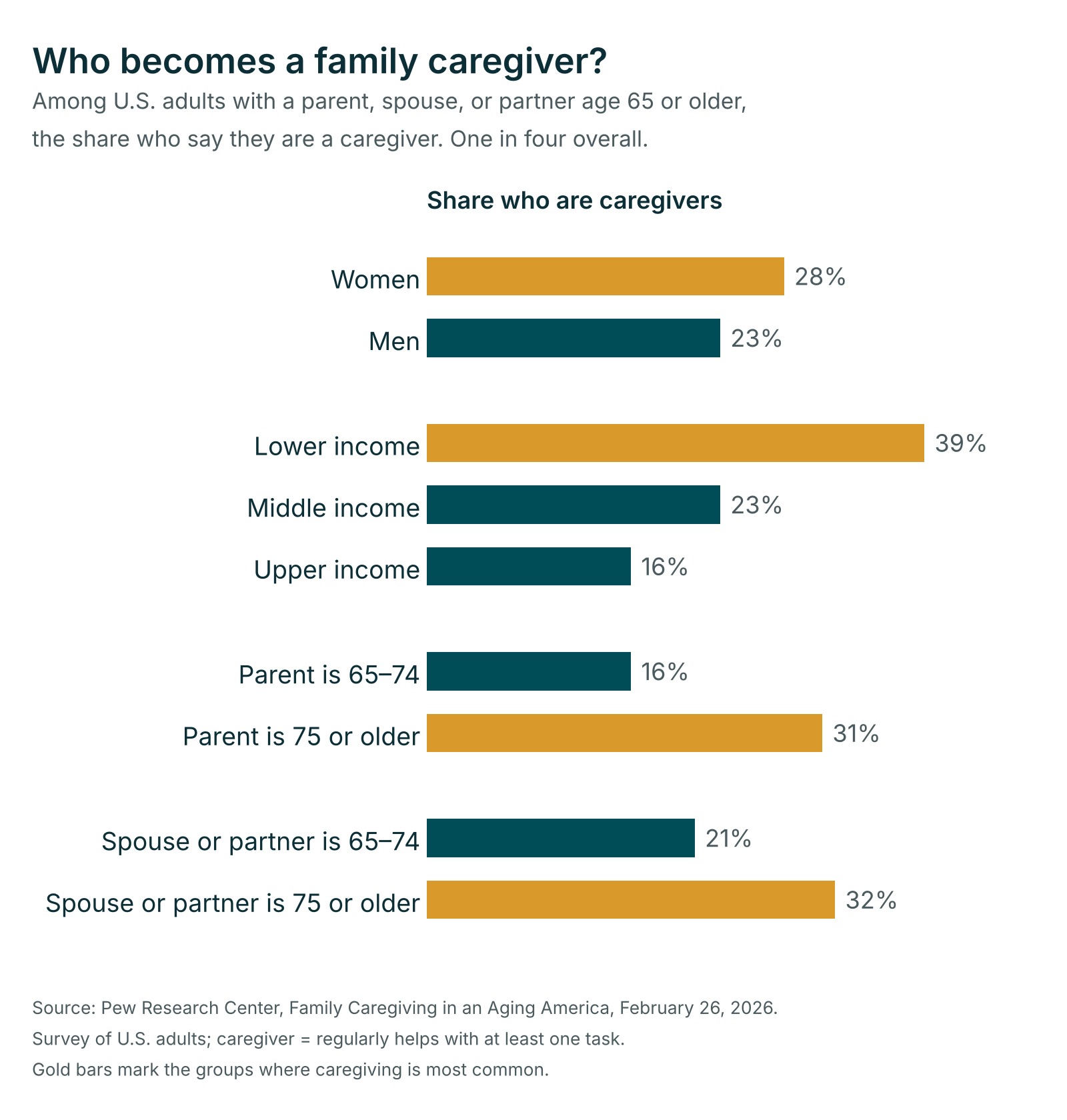
Pew Research Center, 2026
National findings, and the bēkn response.
| Pew Research Center finding (2026) | bēkn ministry response |
|---|---|
| 42% of caregivers of aging parents regularly manage their health care | Workshops on medical decisions and healthcare navigation |
| 39% regularly manage their parent’s finances | Emergency paperwork and future-care planning seminars |
| 36% of regular caregivers report a negative effect on their social life | Caregiver support groups and congregational relationships |
| Caregiving is more common in lower-income families | Affordable church-based resources |
| Caregiving rises sharply once a parent or spouse passes 75 | Early conversations, planning, and respite ministry |
Federal data and our 2026 survey
What the data shows, and what a church can do.
| Bureau of Labor Statistics finding (2023–24) | Need identified in bēkn’s 2026 survey | Church ministry opportunity |
|---|---|---|
| Care includes arranging medical care and transportation | Navigating healthcare and medical decisions | Healthcare navigation workshops; Starting the Conversation |
| 52% provide care several times a week or more | Managing practical caregiving demands | Caregiver support groups, volunteer care teams, dementia respite |
| 14% have provided care for ten years or more | Sustaining care over time | Ongoing pastoral encouragement, caregiver relationships, respite |
| 79% care only for someone outside their own household | Coordinating care across households | Emergency preparedness, next-of-kin information, family care planning |
| Caregivers 65 and older give the most intensive daily care | Preparing for future care and emergencies | Prepared, Not Panicked seminars, including help assembling a Nokbox of documents for next of kin (purchases through this link support bēkn), and congregational support |
Sources: Pew Research Center, Family Caregiving in an Aging America (Feb. 2026); U.S. Bureau of Labor Statistics, Unpaid Eldercare in the United States, 2023–2024 (Sept. 2025); bēkn 2026 Senior Caregiver Survey.
Request a free consultation
Start with a 30-minute call.
Tell us about your congregation, its seniors, and who is already caregiving. No cost and no commitment; it’s how every bēkn ministry has started.